Introduction to Database
-
Understand database fundamentals and how data is structured and managed using DBMS.
What is a Database?
A database is an organized collection of data that allows us to store, retrieve, update, and delete data efficiently.
A database is like a digital cupboard where data is stored properly.
Real-Life Example
Student records in college
Bank account details
Mobile contact list
Why Databases Are Needed
❌ Problems without Database
Data loss
Slow access
Duplicate data
No security
✅ Advantages of Database
Stores large amount of data
Fast data retrieval
Data security
Easy data update
Multi-user access
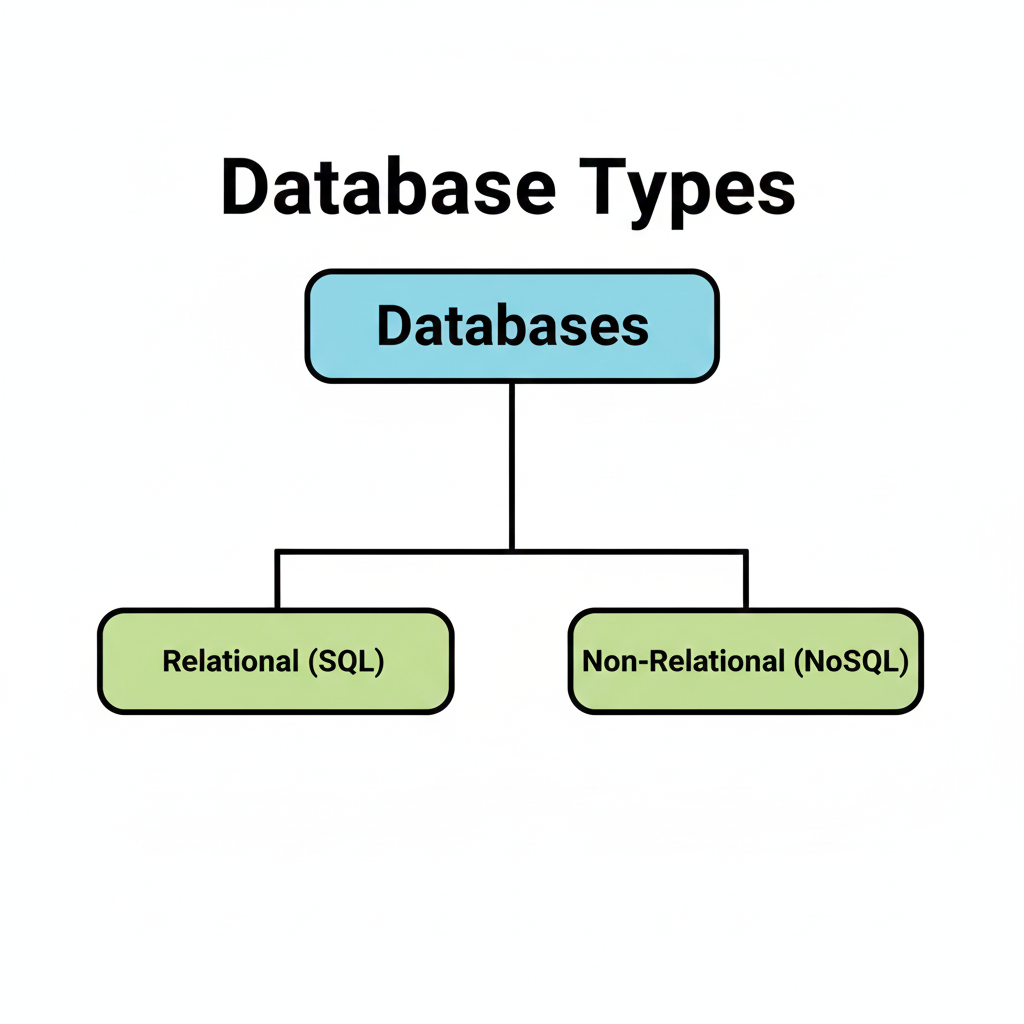
Types of Databases
Relational Database (SQL Database)
What is a Relational Database?
A relational database stores data in the form of tables (rows & columns) and uses SQL (Structured Query Language).
Real-Life Example
Excel sheet with rows & columns
Student marks table
Examples
MySQL
PostgreSQL
Oracle
SQLite
SQL Server
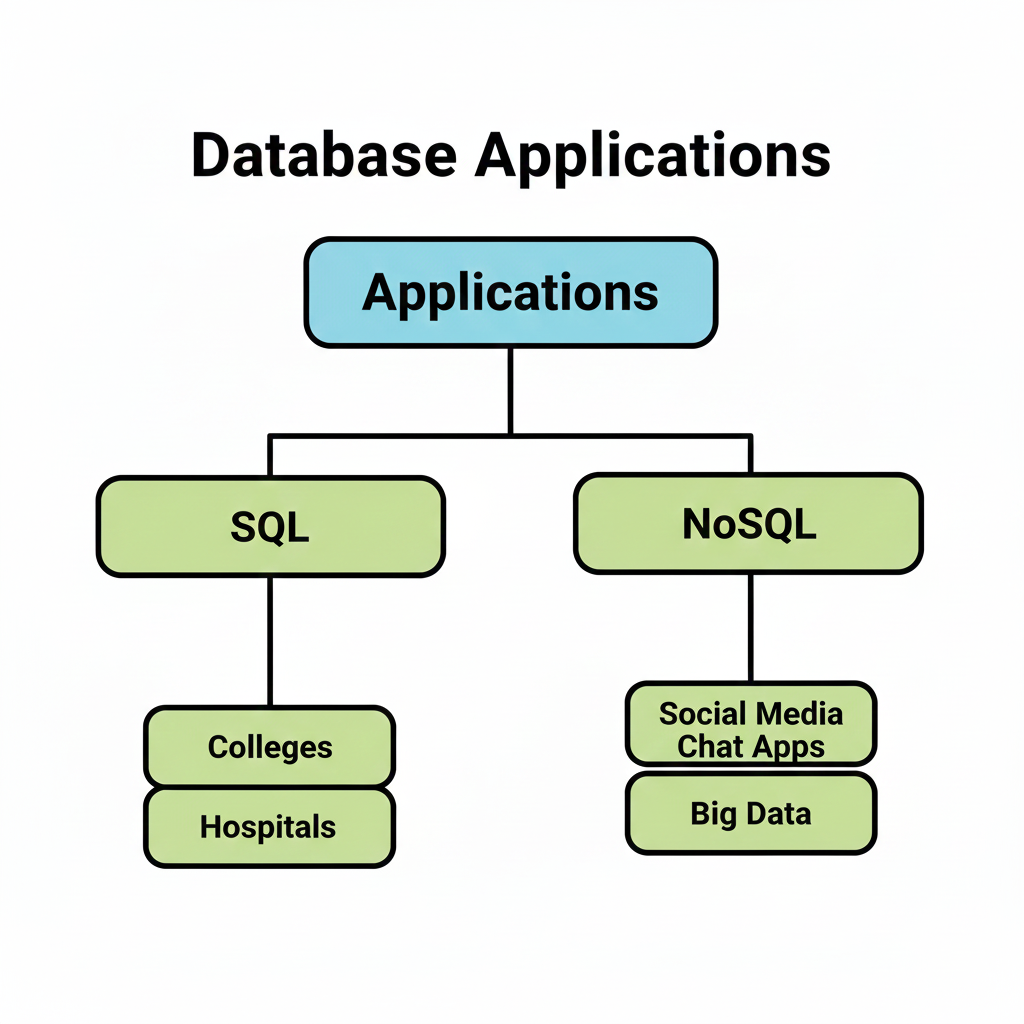
Where We Use Relational Databases (Very Important)
Relational databases are used when:
➡ Used when data is structured and relations are important.
Advantages of Relational Databases
Strong data consistency
ACID properties
Well-defined structure
Easy to manage relations
Topic 1: What is MySQL?
MySQL is an open-source relational database management system (RDBMS) used to store, manage, and retrieve data using SQL (Structured Query Language).
Simple Definition
MySQL is a database software where data is stored in tables (rows and columns) and accessed using SQL commands.
Real-Life Example
Think of MySQL like an Excel file:
Each sheet → Table
Each row → Record
Each column → Field
But MySQL is much faster, secure, and used in websites & applications.
Where MySQL is Used
Websites (Login, Signup, Profile data)
Banking systems
College & Student management systems
E-commerce (products, orders, users)
Mobile & web applications
Topic 2: Features of MySQL
Key Features
Open Source – Free to use
Fast Performance – Handles large data efficiently
Secure – User authentication & access control
Scalable – Used by small apps to large systems
Cross-Platform – Works on Windows, Linux, macOS
Supports Python, Java, PHP, Django, Flask
Relational Database – Uses tables with relationships
NoSQL Database (Non-Relational Database)
What is a NoSQL Database?
A NoSQL database stores data in non-table formats such as:
Document
Key-Value
Column
Graph
Real-Life Example
JSON data
Social media posts
Examples
MongoDB
Firebase
Cassandra
Redis
CouchDB
Where We Use NoSQL Databases (Very Important)
NoSQL databases are used when:
Used when data is unstructured or semi-structured and high speed & scalability are required.
Advantages of NoSQL Databases
Highly scalable
Flexible data structure
Fast performance
Handles big data easily
SQL vs NoSQL (Simple Comparison)