MERN Overview
- The MERN Stack is a popular full-stack development approach using MongoDB, Express, and Node.js. This content explains how the MERN architecture works, the role of each technology, common use cases, and career opportunities in full-stack web development.
🔹 What is MERN Stack?
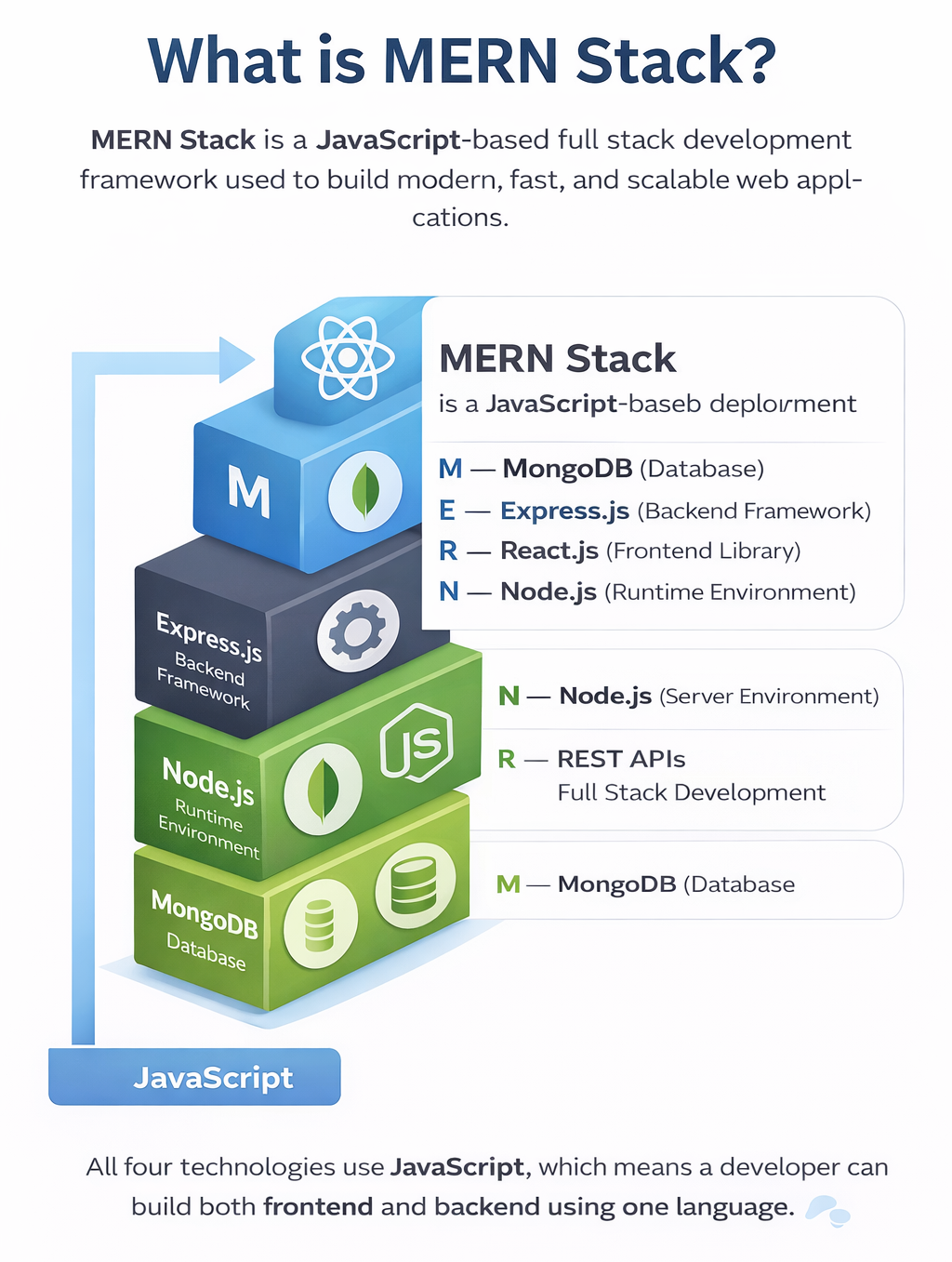
MERN Stack is a JavaScript-based full stack development framework used to build modern, fast, and scalable web applications.
The term MERN comes from the first letters of four powerful technologies:
M – MongoDB (Database)
E – Express.js (Backend Framework)
R – React.js (Frontend Library)
N – Node.js (Runtime Environment)
All four technologies use JavaScript, which means a developer can build both frontend and backend using one language.
Why MERN Stack is Popular
Uses only JavaScript
Highly scalable & flexible
Ideal for Single Page Applications (SPA)
Strong community support
Used by startups & enterprises
🔹 MERN Architecture
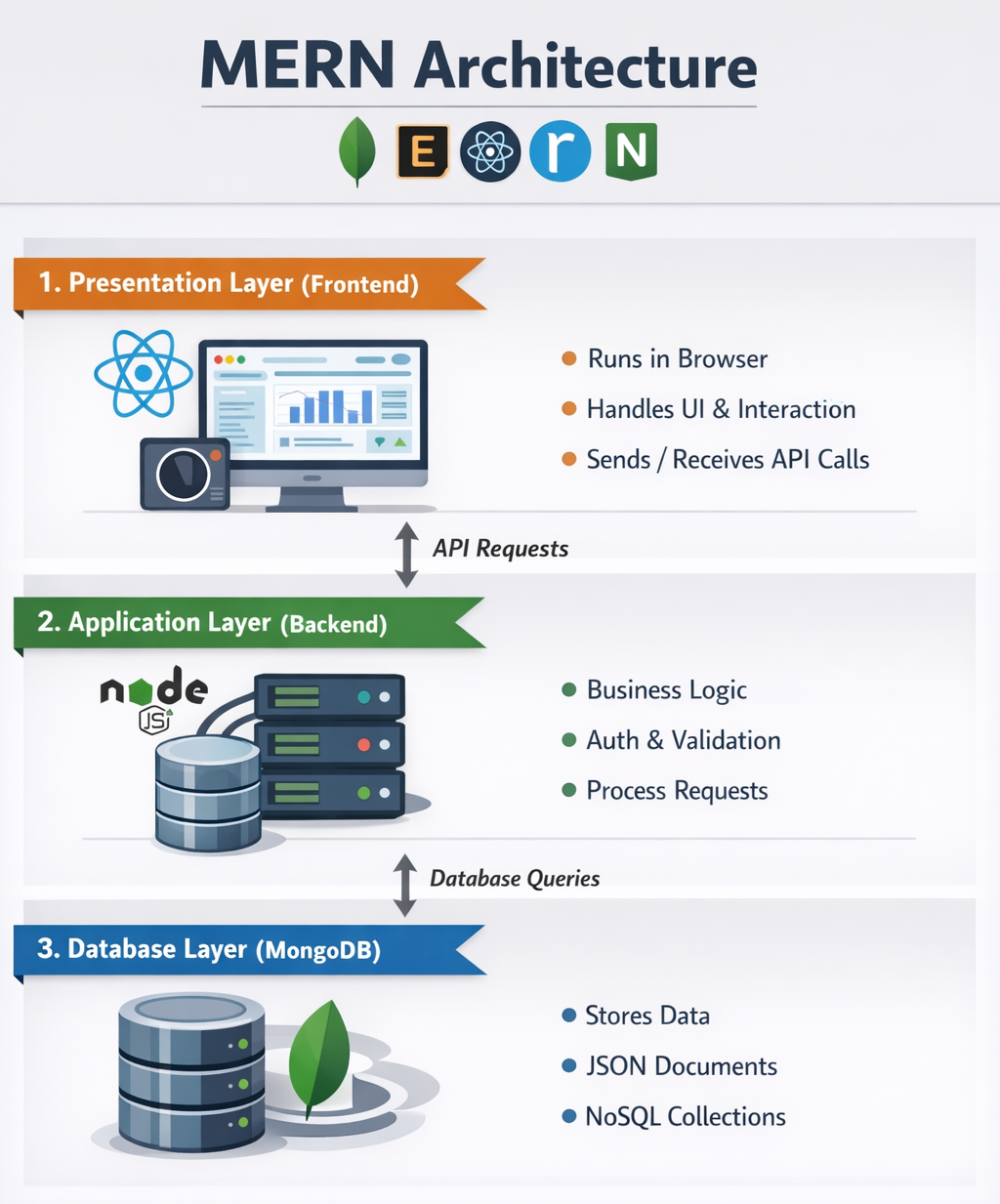
MERN follows a 3-tier architecture:
Presentation Layer (Frontend)
Application Layer (Backend)
Database Layer
Each layer has a clear responsibility and communicates using REST APIs.
Architecture Layers Explained
1. Frontend Layer (React)
Runs in the browser
Handles UI and user interaction
Sends API requests to backend
Receives JSON data and displays it
2. Backend Layer (Node + Express)
Processes client requests
Contains business logic
Manages authentication & validation
Connects frontend with database
3. Database Layer (MongoDB)
Stores application data
Uses collections instead of tables
Stores data in JSON-like documents
🔹 Role of MongoDB, Express.js, Node.js
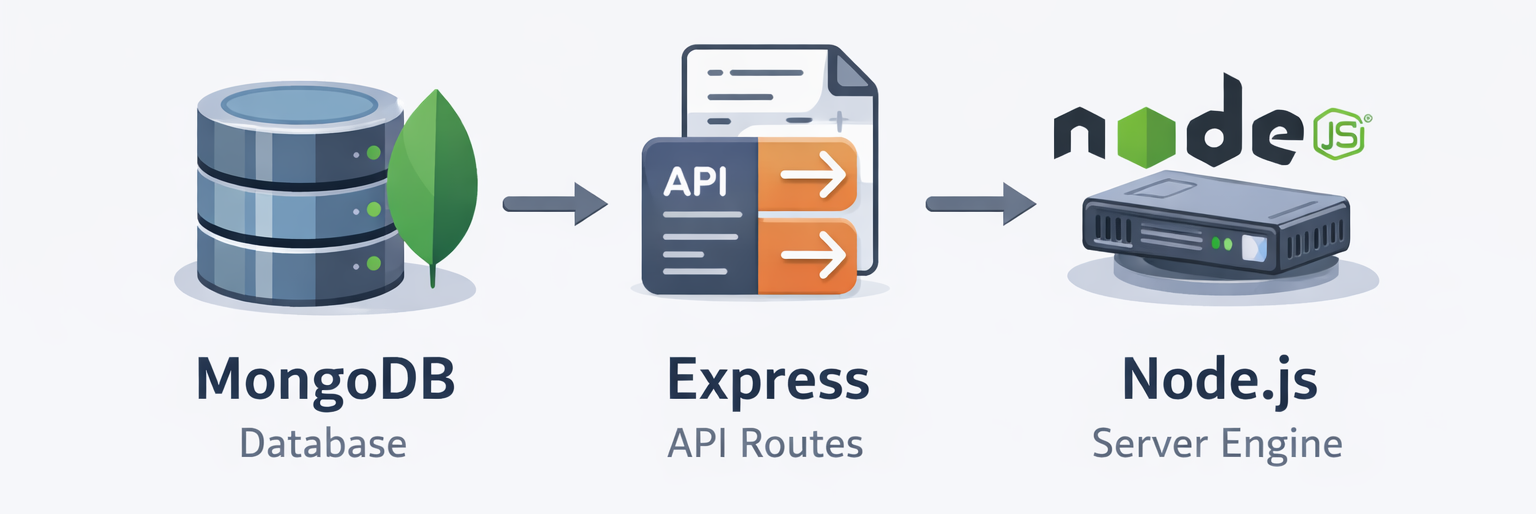
MongoDB – Database Layer
MongoDB is a NoSQL document-based database.
Key Roles:
Stores data in flexible JSON format
No fixed schema required
Fast read/write operations
Easy scaling (horizontal scaling)
Example Use:
User data
Product listings
Orders, posts, comments
Express.js – Backend Framework
Express.js is a lightweight Node.js framework used to build APIs.
Key Roles:
Handles HTTP requests & responses
Creates REST APIs
Middleware support
Routing system
Get Users Endpoint
Returns all users as a JSON response from the server.
app.get("/users", (req, res) => {
  res.json(users);
});
Node.js – Runtime Environment
Node.js allows JavaScript to run outside the browser.
Key Roles:
Runs server-side code
Handles multiple users using event-driven model
Fast performance (non-blocking I/O)
🔹 Use Cases of MERN Stack
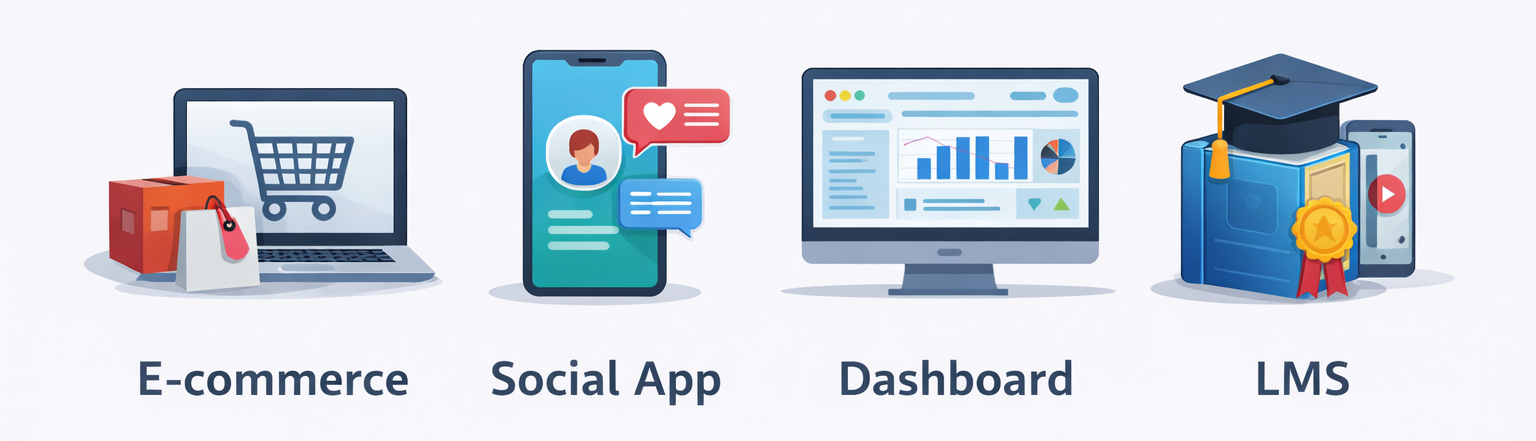
Common Real-World Applications
E-Commerce Websites
Product management
Cart & payment integration
Order tracking
Social Media Platforms
User profiles
Posts, likes, comments
Real-time updates
Dashboards & Admin Panels
Data visualization
User management
Reports & analytics
Learning Management Systems (LMS)
Courses & lessons
Student progress
Admin dashboards
Why MERN Fits These Use Cases
Fast performance
Real-time updates
Scalable architecture
Easy API integration
🔹 Career Opportunities in MERN Stack
Job Roles
MERN Stack Developer
Full Stack JavaScript Developer
Backend Developer (Node.js)
Frontend Developer (React)
API Developer
Industry Demand
Startups
IT companies
SaaS platforms
Freelancing & Remote jobs

Career Growth
Junior Developer → Senior Developer → Tech Lead → Architect